
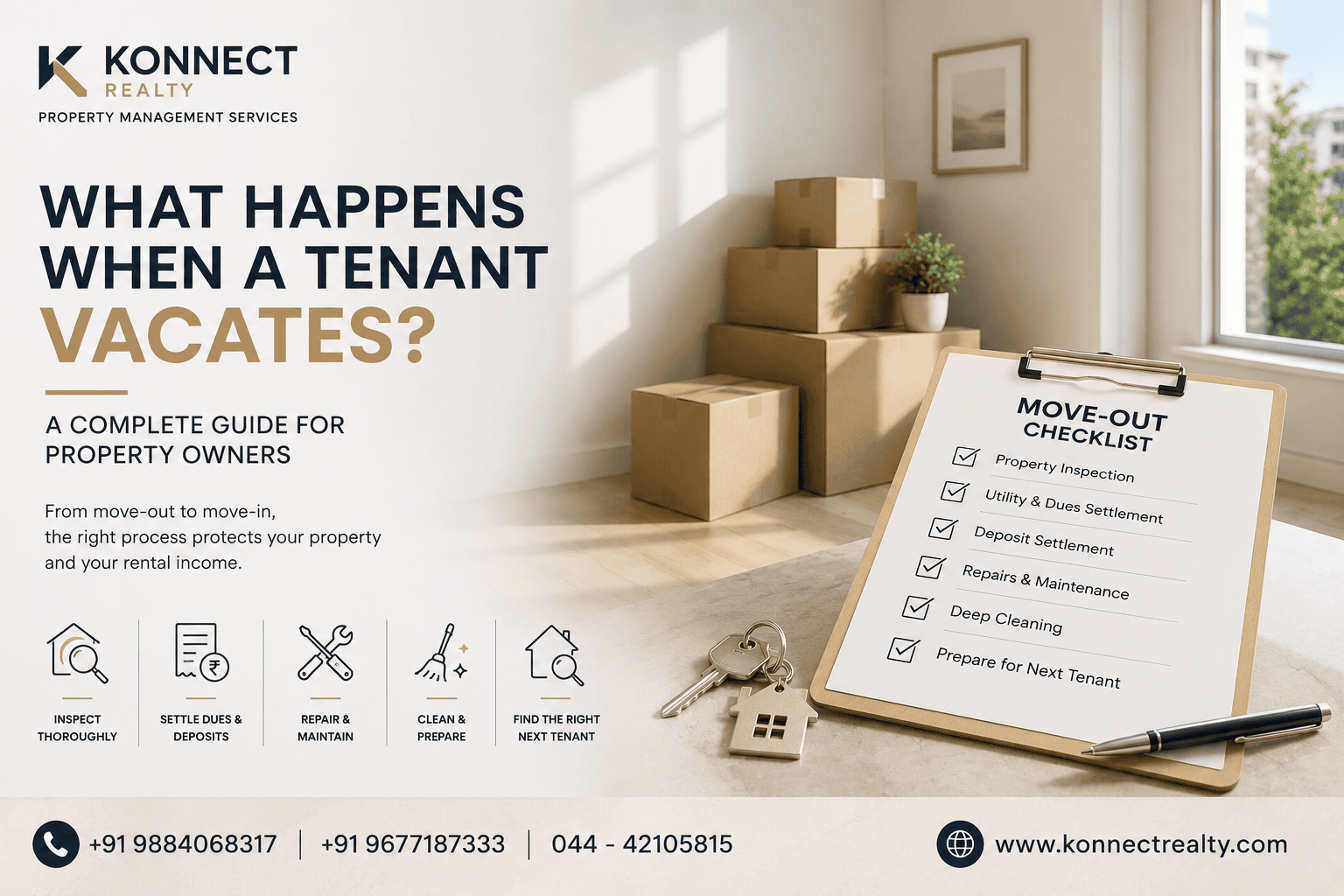
A tenant moving out may look like a simple transition, but for a property owner, it is one of the most important stages in rental property management. The period between one tenant leaving and another tenant moving in can directly affect rental income, property condition, and the overall performance of the investment.
In Chennai, where rental properties experience different levels of tenant turnover depending on location, property type, and tenant profile, managing the move-out process properly is essential. A rushed handover, incomplete inspection, unresolved maintenance issues, or delays in finding the next tenant can easily turn a short vacancy into a longer and more expensive one.
For property owners, the goal should not simply be to close the previous tenancy. The objective is to complete the exit smoothly, protect the property, settle everything transparently, and prepare the home for its next occupant.
The Process Begins When the Tenant Gives Notice
The tenant move-out process actually begins before the tenant leaves the property. Once a tenant provides notice, the owner or property manager should review the rental agreement and confirm the applicable notice period, expected move-out date, pending rent, and other obligations.
This is also the right time to communicate clearly with the tenant about the handover process. Advance coordination makes it easier to schedule the final inspection, collect keys, record meter readings, check outstanding payments, and identify any maintenance requirements.
Good communication at this stage can prevent unnecessary misunderstandings later.
Conduct a Detailed Property Inspection
The final property inspection is one of the most important steps when a tenant vacates.
The property should be checked room by room, including walls, flooring, doors, windows, electrical fittings, plumbing fixtures, kitchen fittings, bathroom fixtures, appliances provided with the property, and other items mentioned in the original handover documentation.
Normal wear and tear should be distinguished from damage caused during the tenancy. This distinction is important because not every repair can automatically be treated as a tenant-related expense.
Photographs and inspection records can provide useful documentation of the property’s condition at handover. A professional property management process should maintain proper records so that the owner has a clear understanding of what has changed during the tenancy.
Check Rent, Utilities and Other Pending Payments
Before closing the tenancy, the financial side of the handover should also be completed.
The owner or property manager should verify whether the final month’s rent has been paid and whether there are outstanding electricity, water, maintenance, association, or other property-related charges.
Meter readings should be recorded wherever applicable. Any pending amount should be clearly communicated to the tenant instead of becoming a dispute after the tenant has already moved out.
A transparent closing statement makes the entire process easier for both parties.
Handle the Security Deposit Carefully
Security deposit settlement is another area where disagreements can occur.
If the property is returned in acceptable condition and there are no legitimate outstanding amounts, the deposit should be handled according to the rental agreement and applicable requirements. If deductions are necessary for documented damage or unpaid obligations, the owner should maintain supporting records and communicate the reason clearly.
The objective should be a documented and transparent settlement rather than an informal adjustment.
Identify Repairs Before Finding the Next Tenant
Once the previous tenant has handed over the property, the next priority is understanding what needs to be repaired or restored.
Some issues may be minor: a leaking tap, damaged switch, loose cabinet fitting, wall touch-up, plumbing problem, or deep-cleaning requirement. Other properties may require more extensive work.
This is where timely property management makes a significant difference. Delaying small repairs can affect the property’s presentation when prospective tenants visit and may eventually increase the cost of rectification.
The property should be assessed based on what is necessary to make it functional, clean, safe, and competitive in the current rental market.
Cleaning and Property Preparation Matter
After repairs are completed, the property should be properly cleaned before it is shown to prospective tenants.
A clean and well-maintained property creates a better first impression and helps prospective tenants understand the actual condition of the home. This is particularly important when several similar rental properties are available in the same locality.
However, property owners should avoid spending unnecessarily on cosmetic upgrades that do not meaningfully improve rental potential. The right approach is to identify improvements that support tenant appeal, functionality, and long-term property value.
Avoid Leaving the Property Vacant Without Oversight
A vacant property still requires attention.
When a home remains unoccupied, problems such as water leakage, electrical issues, pest activity, dust accumulation, dampness, or unauthorized access may go unnoticed. In Chennai’s climate, regular oversight is especially useful for properties that remain vacant for extended periods.
Periodic inspections, cleaning, security checks, and timely maintenance help keep the property ready for the next tenant.
This is particularly valuable for owners who live outside Chennai and cannot visit the property regularly.
Start the Tenant Search at the Right Time
Waiting until everything is completed before thinking about the next tenant can unnecessarily extend vacancy.
The next rental cycle should be planned around the expected move-out date. Once the property’s condition and availability are clear, the owner or property manager can begin preparing the listing, determining an appropriate rental expectation, arranging photographs, and scheduling property visits.
At the same time, rushing to place a tenant simply to avoid vacancy can create another problem.
A good property management process balances speed with tenant quality. Finding the first available tenant is not necessarily the same as finding the right tenant.
Tenant Screening Should Not Be Skipped
A vacant property creates pressure because every additional day without a tenant can mean lost rental income. That pressure should not lead to weak tenant screening.
Tenant verification, employment information, rental history where available, documentation, and other relevant checks can help property owners make better decisions.
The cost of a longer vacancy may be frustrating, but the cost of selecting an unsuitable tenant can be considerably higher in terms of rent delays, disputes, property damage, and management effort.
The Move-Out Is Also an Opportunity for Property Owners
A tenant transition is not only an administrative process. It gives the property owner an opportunity to review the overall performance of the property.
Was the previous rent aligned with the market? Were there recurring maintenance complaints? Did the property require frequent repairs? Was the tenant turnover unusually high? Could certain improvements make the property more attractive?
These questions can help owners make better decisions before the next tenancy begins.
Property management should therefore look beyond individual transactions and focus on the long-term performance of the asset.
Why Professional Property Management Makes Tenant Transitions Easier
Managing a tenant exit involves coordination between the owner, tenant, maintenance professionals, cleaners, building management, and prospective tenants. For owners who are busy, live outside Chennai, or manage multiple properties, handling every stage personally can become difficult.
Professional property management brings these activities together through a structured process. Konnect Realty’s property management services include tenant coordination, rent collection, property inspections, maintenance management, tenant placement, lease management, and ongoing property oversight.
This means the owner does not have to personally coordinate every small requirement when a tenant moves out.
Instead, the property can move through a defined process: tenant exit, inspection, settlement, repairs, cleaning, marketing, tenant screening, and new occupancy.
Conclusion
A tenant vacating a property should not be treated as the end of one rental agreement. It is the beginning of the next stage of property management.
A properly managed tenant exit protects the property, reduces disputes, controls unnecessary expenses, and helps minimize the time the property remains vacant. Detailed inspections, transparent financial settlement, timely repairs, proper cleaning, and careful tenant selection all contribute to a smoother rental cycle.
For Chennai property owners, having a reliable local property management partner can make this entire transition easier. Instead of dealing with every inspection, repair, tenant conversation, and follow-up personally, owners can have the process professionally coordinated from one stage to the next.
If you own a rental property in Chennai and want professional support with tenant management, inspections, maintenance, rent collection, and property oversight, Konnect Realty can help manage the process from tenant placement to ongoing property care.
Konnect Realty
📞 +91 9884068317
📞 +91 9677187333
☎️ 044 – 42105815
🌐 www.konnectrealty.com
Manage your property better. Protect its value. Keep your rental income working for you.