
Property ownership in Chennai has changed significantly over the last few years. What was once a relatively simple task—renting out a home, collecting rent, and fixing issues as they arose—has evolved into a far more complex responsibility. By 2026, rising NRI ownership, tenancy regulations, climate-related wear and tear, and increasingly demanding tenants mean that managing property without a structured system can quietly erode both rental income and asset value.
This guide is written for property owners who want clarity, not marketing jargon. Whether you own an apartment on OMR, a villa along ECR, an independent house in Adyar, or a long-held family property in Anna Nagar, this article explains how property management in Chennai actually works today, what problems owners face in reality, and how professional management protects long-term value.
Understanding Property Management in Chennai
Property management is not just about rent collection. In Chennai, it is a continuous, year-round process that combines tenant handling, maintenance planning, legal compliance, and financial oversight. A property manager acts as the local representative of the owner, ensuring the property remains occupied, functional, legally compliant, and financially viable.
For many owners—especially NRIs—property management becomes essential because distance removes visibility. Small issues like delayed repairs, informal tenant arrangements, or unpaid utility bills can escalate into serious financial or legal problems if left unchecked.
Why Property Owners in Chennai Are Turning to Professional Management
Chennai’s real estate market remains stable, but it is no longer forgiving of passive ownership. Rental demand is strong in corridors like OMR, Velachery, and T. Nagar, yet tenants today expect prompt responses, clean homes, and proper documentation. At the same time, the city’s coastal climate accelerates deterioration. Humidity, monsoons, and water stress place constant pressure on plumbing, electrical systems, walls, and roofing.
Owners who attempt to manage properties remotely often face recurring challenges: tenants delaying rent, maintenance being addressed only after damage worsens, confusion around rental agreements, and lack of clarity on compliance with the Tamil Nadu Tenancy Act. These issues are rarely dramatic at first—but over time, they directly affect rental yield and resale value.
Property Management in Chennai: Area-Specific Realities
Each part of Chennai presents its own management challenges. Properties along OMR, for instance, often experience high tenant turnover due to the IT workforce. Gated communities require coordination with associations, strict adherence to rules, and timely maintenance approvals. Along ECR, villas face greater exposure to salt air, moisture, and storm damage, making preventive maintenance critical. Older homes in Adyar and Anna Nagar demand careful attention to plumbing, wiring, and structural upkeep.
A professional property management company does not apply a one-size-fits-all approach. Effective management depends on understanding local conditions, tenant profiles, and building age—factors that significantly influence maintenance schedules and rental strategy.
What Full-Service Property Management Actually Involves
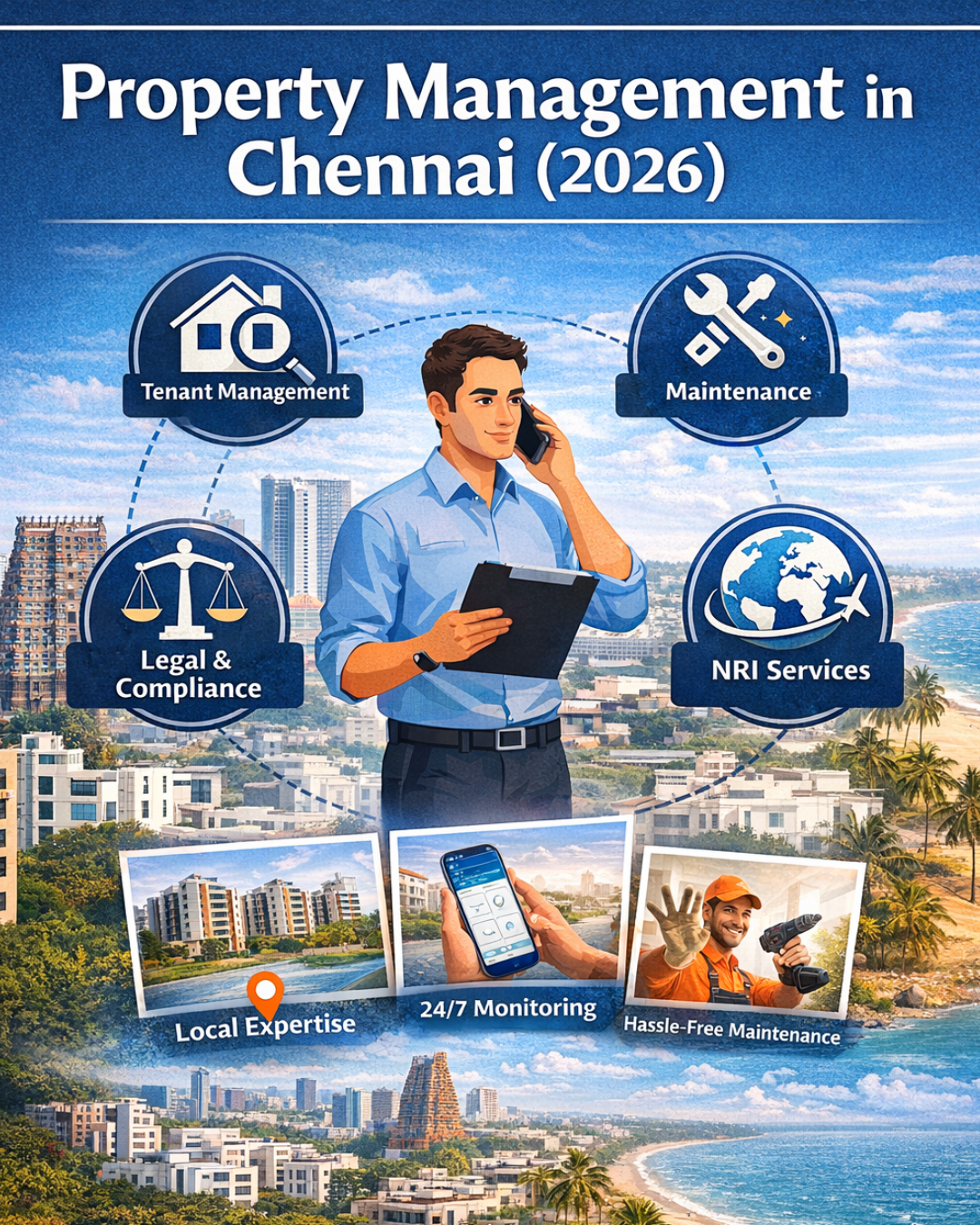
In practice, property management in Chennai revolves around four interconnected responsibilities. First is tenant management: finding suitable tenants, verifying backgrounds, drafting legally sound rental agreements, and managing move-ins and exits without disputes. Second is financial management, which includes consistent rent collection, tracking deposits, managing expenses, and providing transparent reporting to owners.
The third responsibility—often the most underestimated—is maintenance. Preventive inspections, timely repairs, and reliable vendor coordination prevent small defects from turning into costly renovations. Finally, legal and compliance oversight ensures that agreements are registered, notice periods are respected, and property-related obligations are fulfilled without exposing owners to risk.
When handled properly, these functions work together to stabilise income and protect the property as a long-term asset.
Property Management for NRIs in Chennai
For NRIs, property ownership is often emotionally significant but logistically challenging. Time zone differences, lack of trusted local contacts, and limited on-ground visibility make self-management impractical. Many NRIs discover problems only after tenants vacate—when repairs are expensive and vacancies stretch longer than expected.
Professional NRI property management services in Chennai bridge this gap by acting as a single point of accountability. Regular inspections, documented updates, and structured reporting allow owners abroad to retain control without daily involvement. This is particularly important in fast-moving rental markets like OMR and Velachery, where delayed decisions can quickly lead to income loss.
Legal Considerations Every Chennai Landlord Must Understand
Rental properties in Chennai are governed by the Tamil Nadu Regulation of Rights and Responsibilities of Landlords and Tenants Act. This legislation defines how agreements must be registered, how notice periods work, and what responsibilities fall on landlords versus tenants. Ignorance of these provisions does not protect owners from disputes.
Poorly drafted agreements, informal extensions, or undocumented tenant changes are common sources of conflict. Property management professionals ensure that documentation remains compliant and enforceable, reducing the likelihood of prolonged legal issues.
Cost of Property Management in Chennai
Property management fees in Chennai vary depending on the level of involvement required. Basic services such as rent collection and tenant coordination typically cost a fixed monthly amount, while comprehensive management is usually charged as a percentage of monthly rent. Properties requiring frequent maintenance or vacant-property oversight may incur additional costs.
For most owners, the real value lies not in cost reduction but in risk reduction—lower vacancy, fewer disputes, and better long-term upkeep.
Choosing the Right Property Management Company in Chennai
A reliable property management company should demonstrate local expertise, transparent processes, and consistent communication. Owners should look beyond promises and assess how reporting is handled, how vendors are managed, and whether the company understands the specific challenges of the property’s location.
Experience with NRI clients, familiarity with Chennai neighbourhoods, and a structured maintenance approach often distinguish professional operators from informal brokers.
How Konnect Realty Approaches Property Management
At Konnect Realty, property management is approached as an ongoing stewardship responsibility rather than a transactional service. Our focus is on maintaining occupancy stability, preventing avoidable deterioration, and ensuring owners remain informed without being burdened by day-to-day issues.
We manage residential properties across Chennai—including OMR, ECR, Adyar, Velachery, and Anna Nagar—providing end-to-end support that combines tenant handling, maintenance coordination, and compliance oversight.
Final Perspective
Property in Chennai continues to be a strong long-term investment, but only when managed with discipline and local insight. As regulations tighten and tenant expectations rise, professional property management is no longer a convenience—it is a safeguard.
For owners seeking dependable property management services in Chennai, especially those managing assets from abroad, a structured approach makes the difference between a stressful obligation and a stable investment.
Need to create a blog poster for the above blog to post in my website.